LESSON PLANS
First Day of Theatre Class
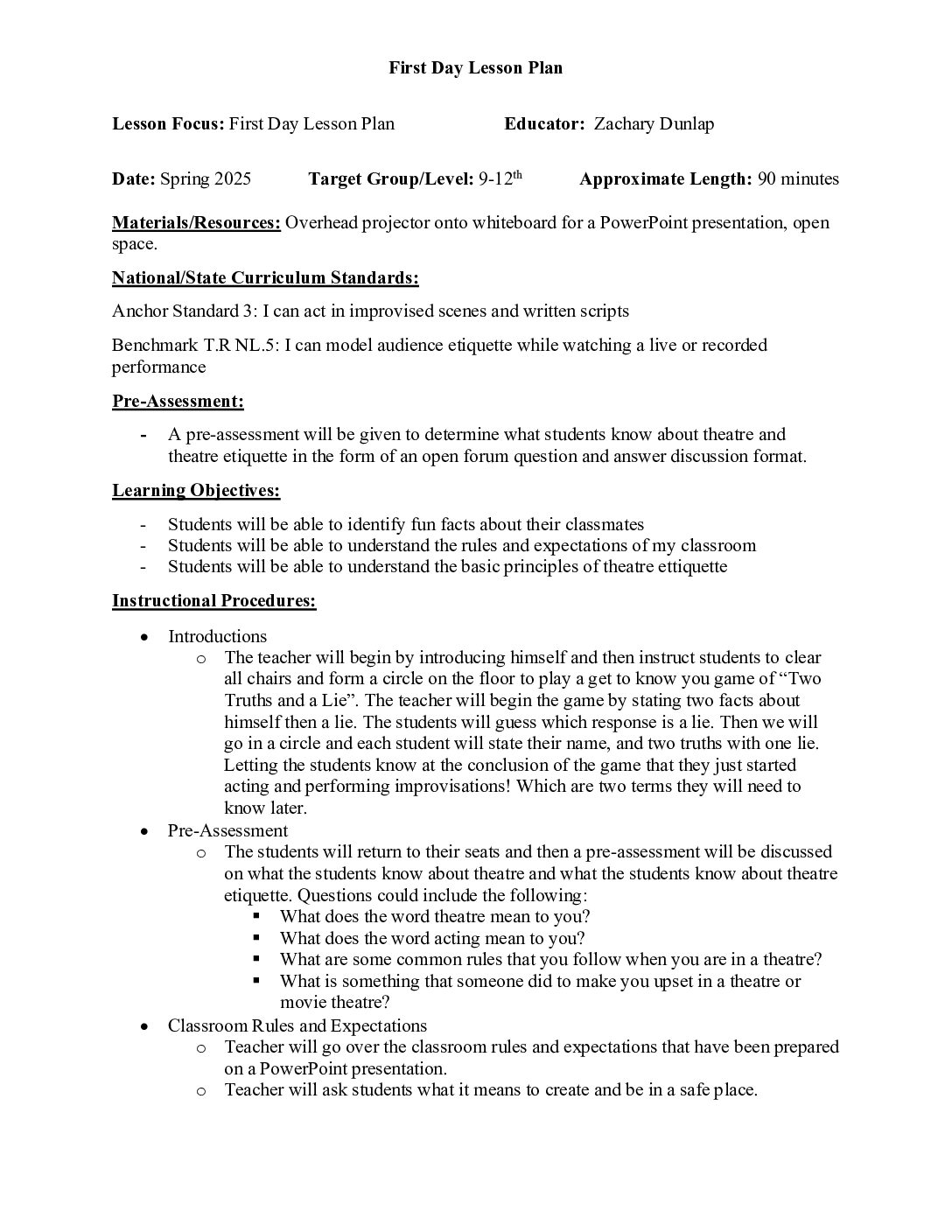
Students start with introductions and a fun icebreaker to build community and introduce improvisation. They discuss what theatre means to them, review classroom rules and expectations, and talk about creating a safe, creative space. The lesson wraps with a video and discussion on proper theatre etiquette to set expectations for audience behavior.
Introduction to Technical Theatre
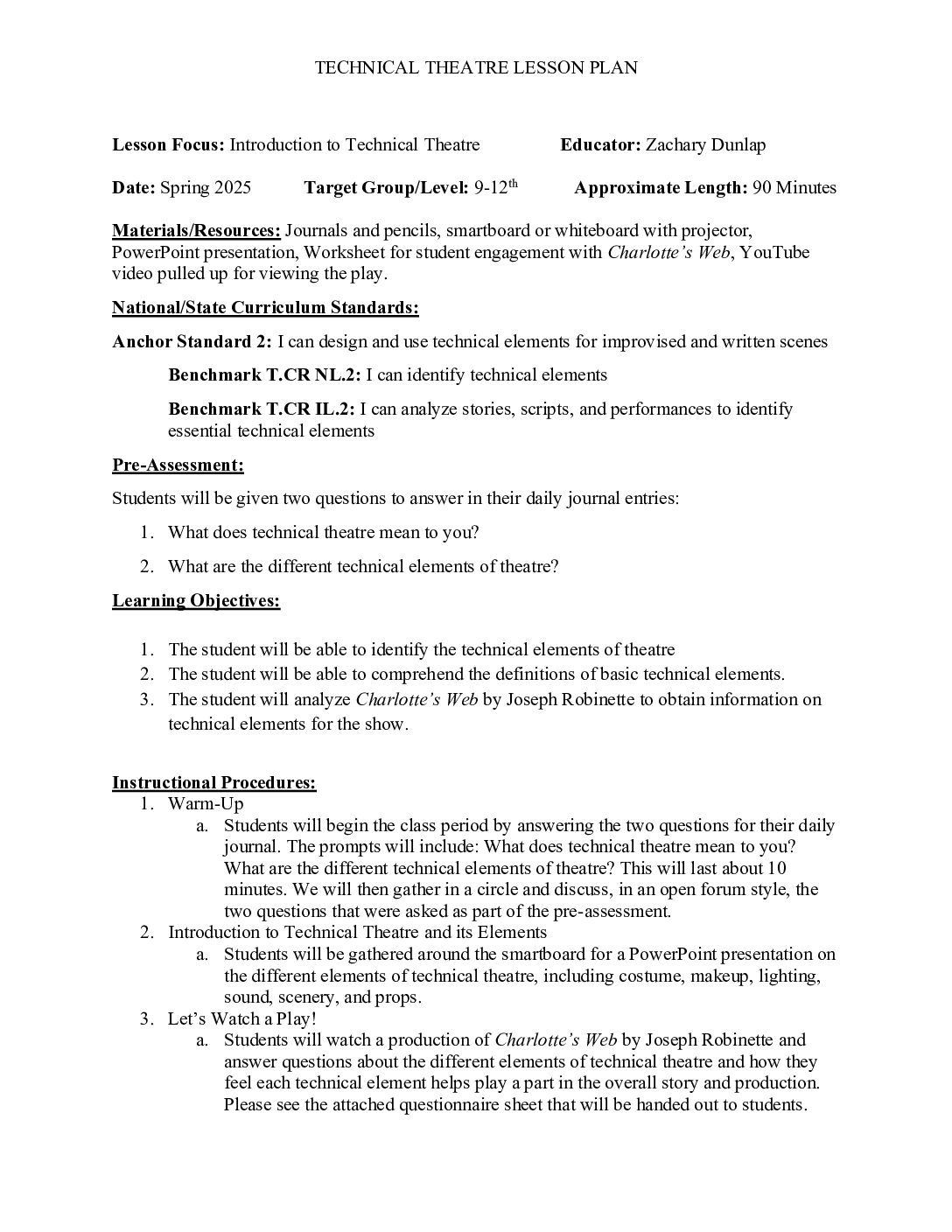
This 90-minute lesson introduces high school students to the key elements of technical theatre, including costumes, makeup, lighting, sound, scenery, and props. Students begin with a journal prompt and group discussion to reflect on their current understanding. A PowerPoint presentation then outlines each technical element. Students apply what they’ve learned by watching a production of Charlotte’s Web and analyzing how each element contributes to the storytelling using a guided worksheet.
Articulation for the Actor
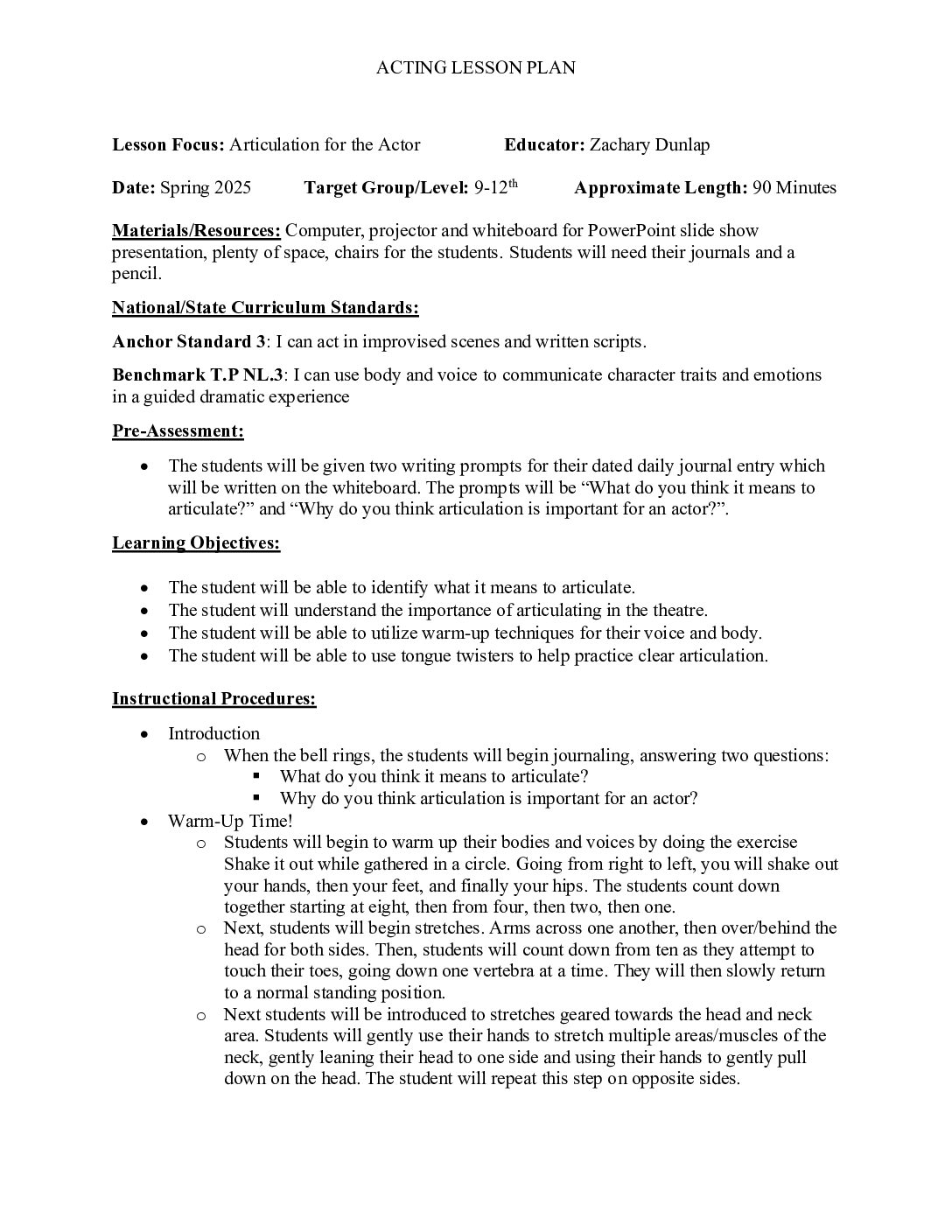
In this 90-minute lesson, students explore the importance of clear speech in performance. The class begins with journaling on the meaning and purpose of articulation, followed by a series of vocal and physical warm-ups to prepare the body and voice. A PowerPoint presentation introduces key articulation concepts, and students practice tongue twisters to apply what they’ve learned. The lesson culminates in a fun, competitive activity where students demonstrate their articulation skills, reinforcing vocal precision and confidence on stage.
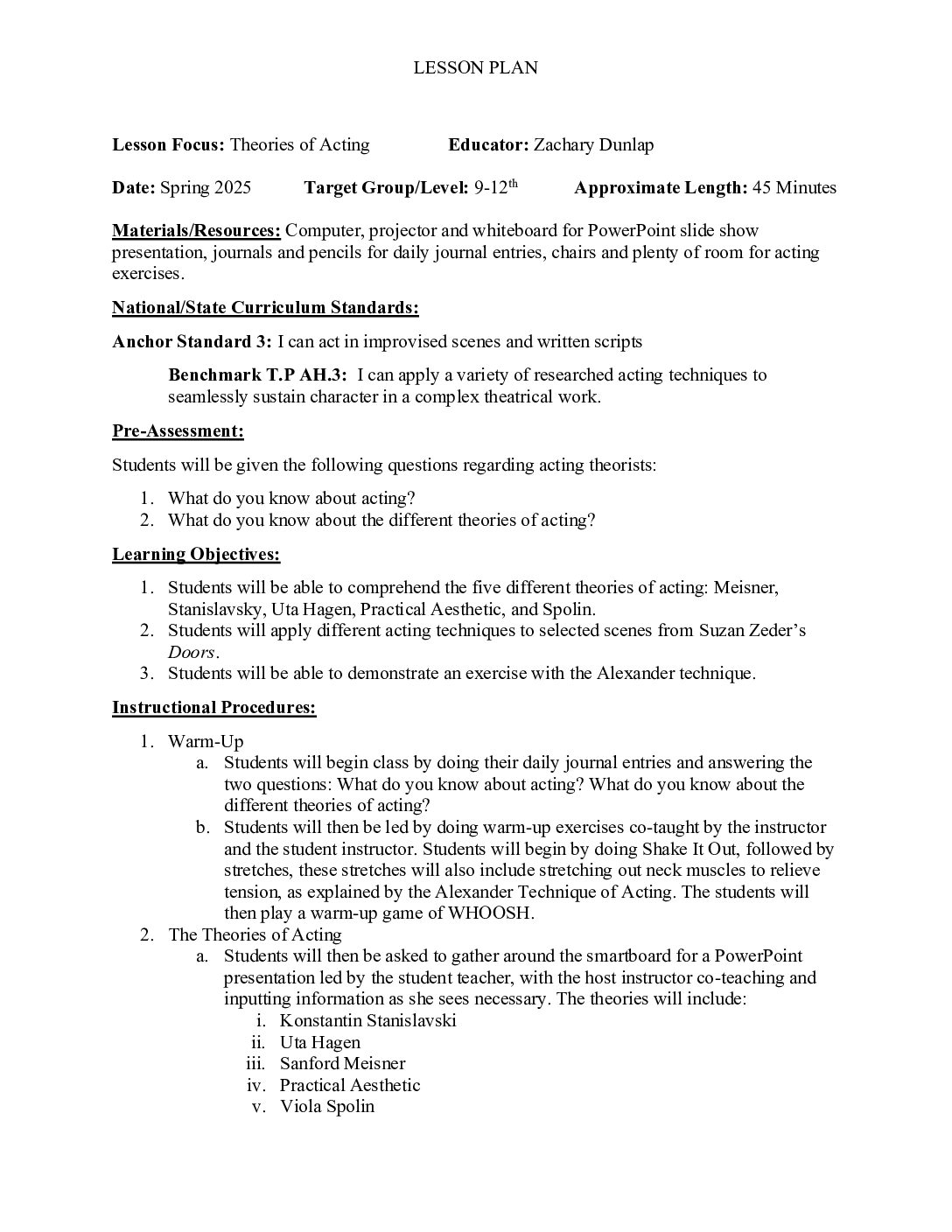
Theories of Acting Lesson Summary
In this 45-minute high school theatre lesson, students explore five foundational acting methods: Stanislavski, Meisner, Uta Hagen, Practical Aesthetic, and Spolin. The class begins with reflective journal prompts and physical warm-ups incorporating the Alexander Technique. A co-taught PowerPoint presentation introduces each theory, followed by hands-on activities—Spolin’s “Group Counting” game to develop ensemble awareness and Stanislavski-inspired “table work” using scenes from Doors by Suzan Zeder—to help students apply techniques and create believable performances.
ASSESSMENTS
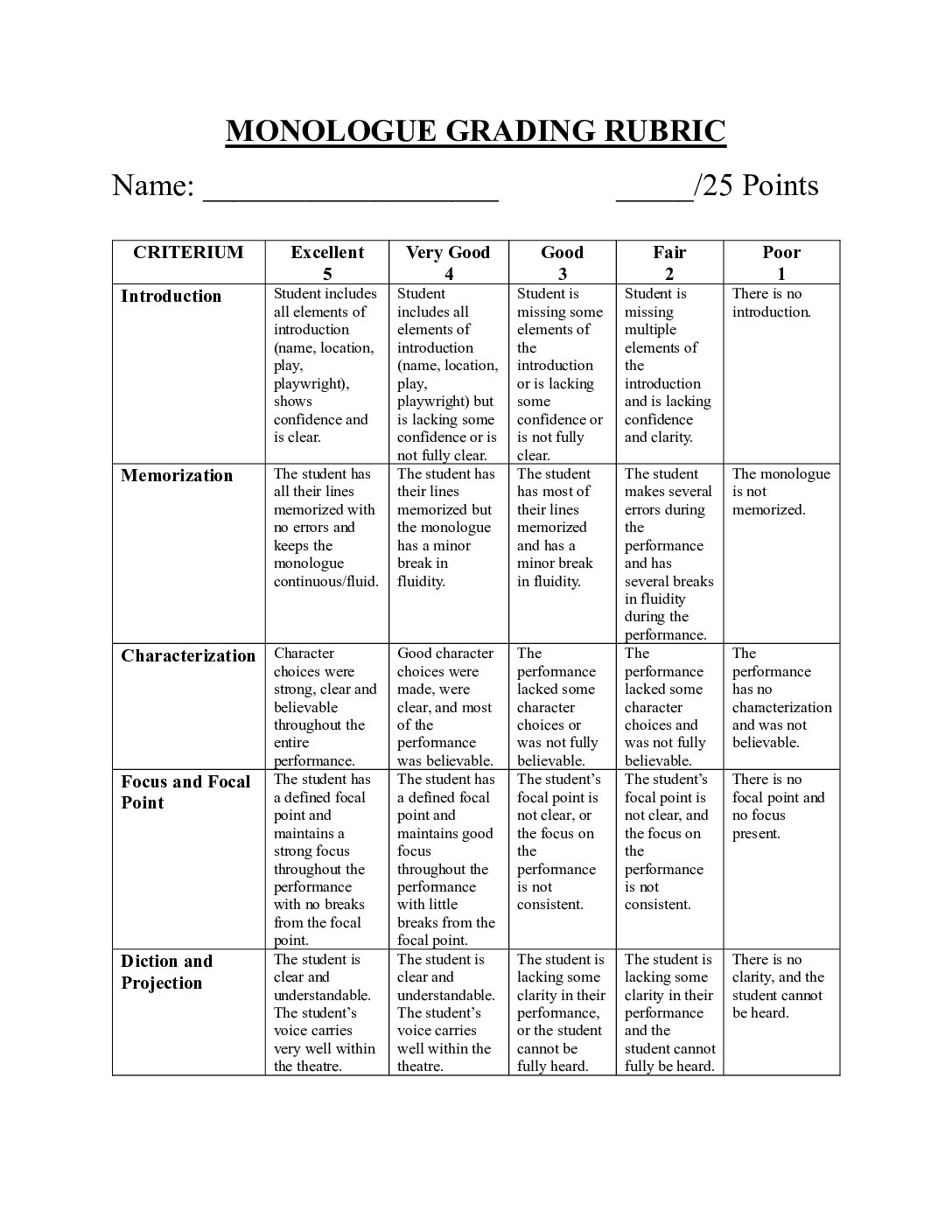
Monologue Performance Assignment & Rubric
Students will select and memorize one of four provided 60-second monologues from published plays, such as Charlotte’s Web, Tracks, Doors, or The Adventures of Rocky and Skye. After reading the full play for context, students will make strong character choices and present their monologue for a grade. Performances are assessed using a detailed rubric covering introduction, memorization, characterization, focus, diction, and projection.
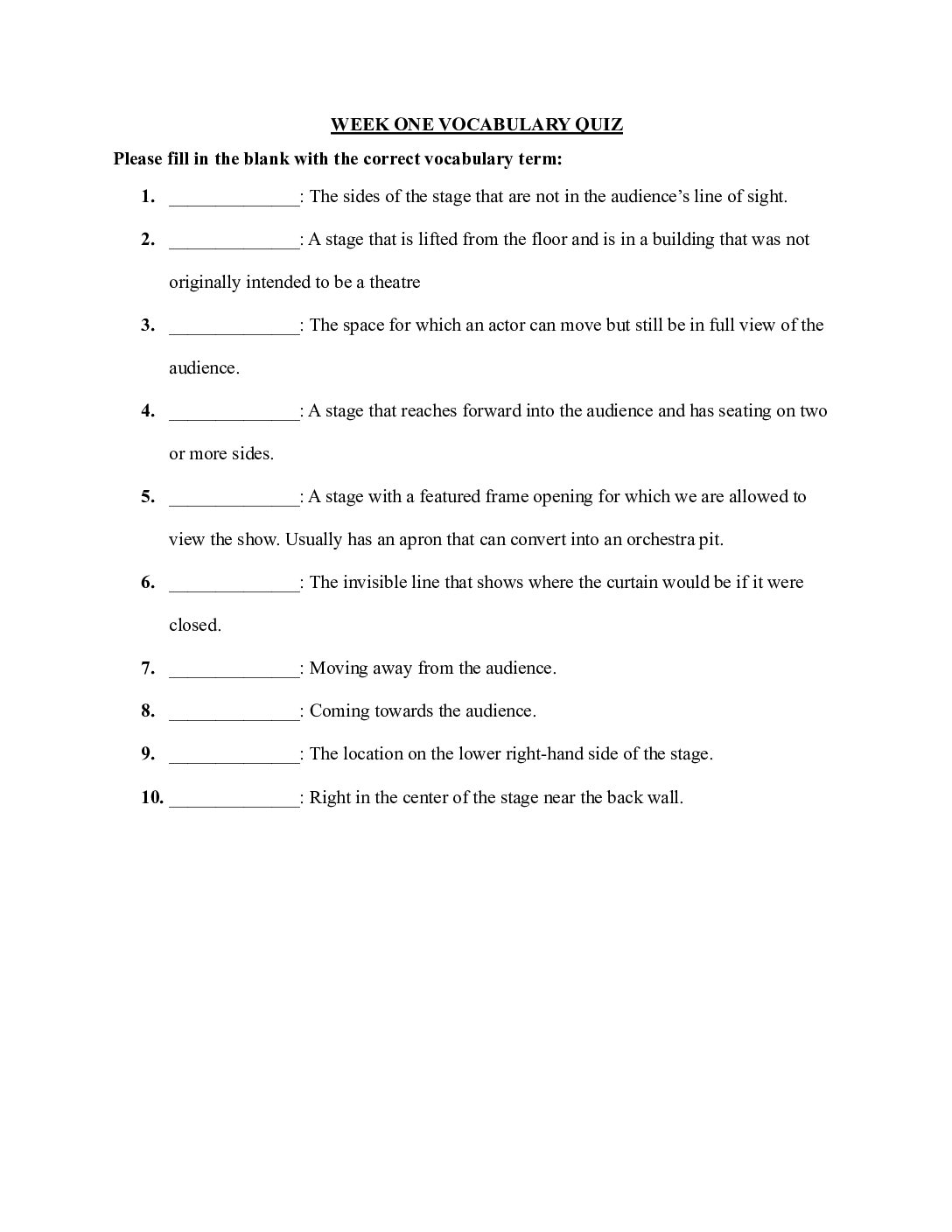
Unit One Vocabulary Quiz – Technical Theatre
This introductory quiz tests students on foundational theatre vocabulary from Week One of the course. It includes ten fill-in-the-blank questions focused on stage directions, types of stages, performance areas, and backstage terminology. Terms like “proscenium stage,” “curtain line,” “wings,” and “downstage right” help reinforce spatial awareness and technical understanding. An answer key is provided for review or grading.
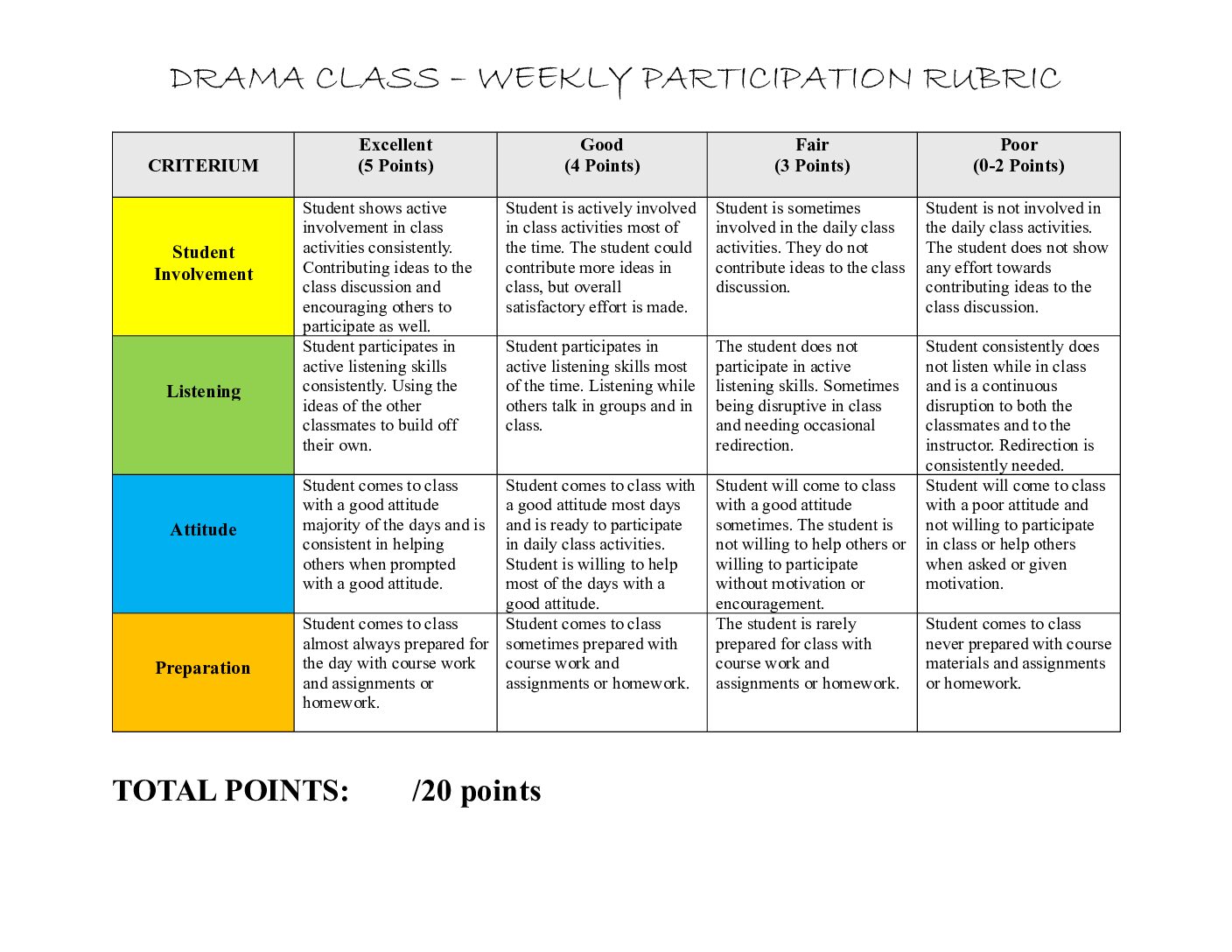
Drama Class Weekly Participation Rubric
This 20-point rubric evaluates students on four key areas: involvement, listening, attitude, and preparation. Each category is scored from 0 to 5 based on student consistency, engagement in class activities, respectful listening, willingness to participate with a positive attitude, and readiness with materials. The rubric encourages accountability and fosters a collaborative, prepared classroom environment.
ADDITIONAL MATERIALS
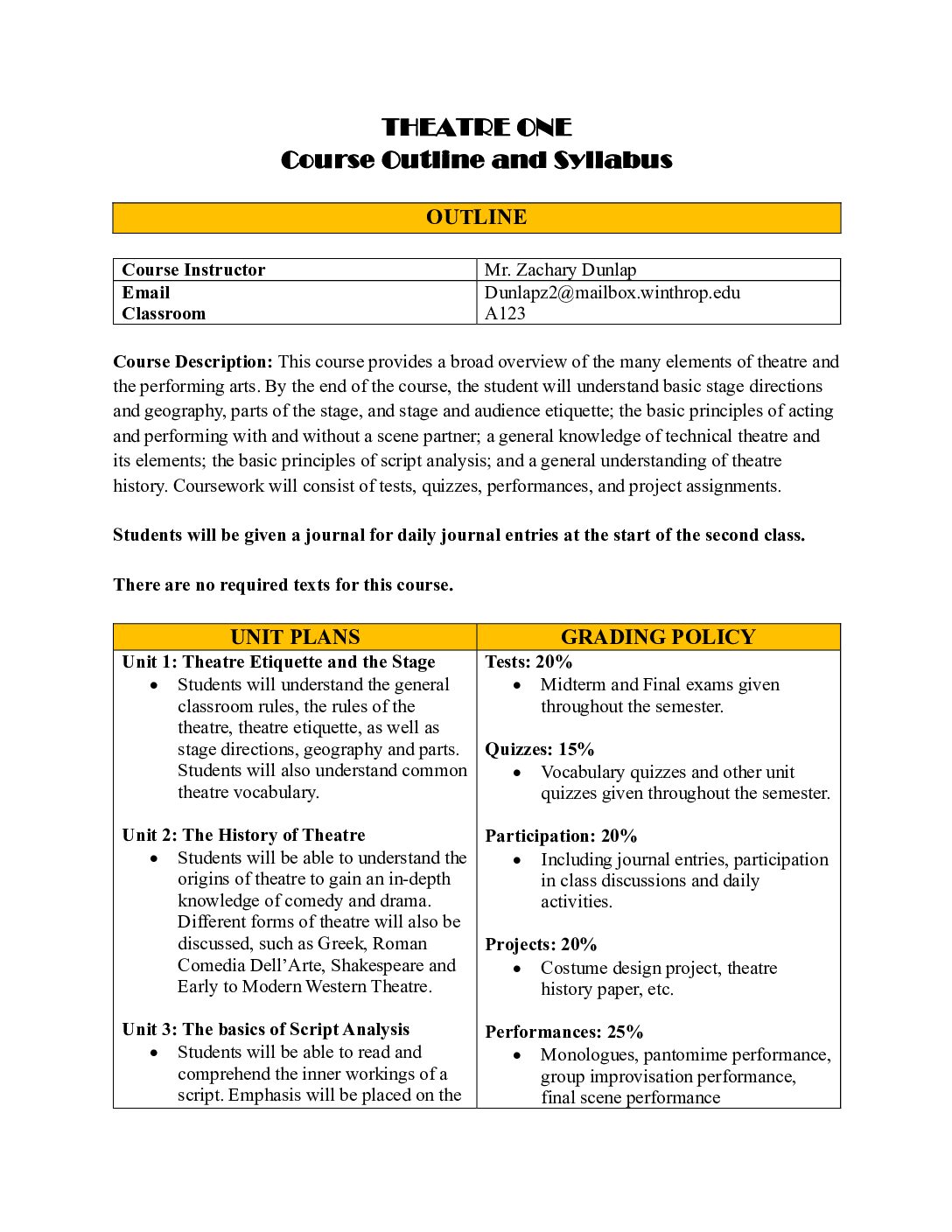
Theatre One Long Range Plan & Syllabus
This semester-long syllabus details a comprehensive high school Theatre I course, organized into five key units: theatre etiquette, history, script analysis, acting, and technical theatre. It includes grading breakdowns, classroom rules, and a full calendar of assignments, projects, and performance dates. A detailed day-by-day planner outlines warm-ups, journal prompts, lessons, games, and rehearsals—fostering creativity, collaboration, and foundational skills in both performance and behind-the-scenes work.
PBIS in the Theatre Classroom
This document details how Positive Behavioral Interventions and Supports (PBIS) are integrated into the theatre class environment. It emphasizes three core values—Be Respectful, Be Responsible, and Be Safe—with clear, theatre-specific expectations for classroom activities, group work, performances, and rehearsals. Aligned with school-wide PBIS practices, it provides a consistent framework for behavior, supports student success, and fosters a positive, collaborative learning space.

A Newsies Cabaret – Content Area Literacy Unit
This presentation outlines a high school integrated theatre and music unit centered on producing A Newsies Cabaret. Students work in design/tech and performance teams to explore cabaret-style productions, develop performance and technical skills, and stage musical numbers from Newsies. The unit includes lessons on the history and style of cabaret, group collaboration, national standards, and accommodations for diverse learners. The project culminates in a final performance, assessed through rubrics and interactive tools like Kahoot.
Charlotte’s Web Study Guide
This resource is designed for parents and teachers to support students attending a performance of Charlotte’s Web by Joseph Robinette. It includes background on the playwright, a plot summary, theatre etiquette reminders, vocabulary terms, and guided pre- and post-show discussion questions. The guide also features cross-curricular activities, such as a science-based spider life cycle project, and highlights key themes like friendship, kindness, and courage. Ideal for deepening student engagement before and after the show.